.jpg)
1. What is a red envelope (hongbao)?
A red envelope, known as hongbao (红包 hóngbāo) in Mandarin and lai see (利是 lì shì) in Cantonese, is a traditional red packet used to give money as a gesture of blessing.
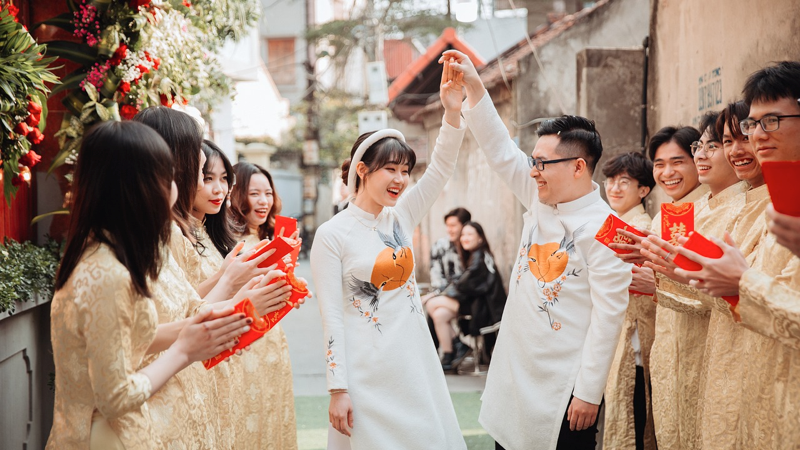
It is a long-standing custom in Chinese communities and several other parts of East Asia. While most closely associated with the Lunar New Year, red envelopes are also given at weddings, milestone birthdays—especially for older family members—the birth of a baby, and sometimes as a sign of encouragement or gratitude.
More than a simple cash gift, a red envelope represents the sharing of good fortune and well wishes between family members and across generations. The color red is essential, symbolizing happiness, prosperity and protection from bad luck.
In recent years, digital red envelopes sent through platforms such as WeChat and Alipay have become extremely popular, especially among younger people, blending an old tradition with everyday technology.
2. Who gives red envelopes during Chinese New Year?
During Chinese New Year, red envelopes are traditionally given by married adults and older family members to younger, unmarried relatives and children.
Parents give them to their children, grandparents to grandchildren, and aunts and uncles to nieces and nephews. In many workplaces, employers also distribute red envelopes to employees as a New Year bonus or goodwill gesture.
Marriage plays an important social role in this tradition. Unmarried adults—regardless of age or financial independence—are generally not expected to give red envelopes, and may still receive them from married relatives. In some communities, small red envelopes are also given to building staff, cleaners or security guards as a sign of appreciation.
3. Who should receive red envelopes?
The main recipients are children and unmarried younger adults.
Children receive red envelopes purely as a blessing and for celebration. Unmarried adults often continue to receive them from married elders until they themselves marry, at which point they usually become givers.
At the same time, adult children increasingly give red envelopes to their parents and grandparents, particularly if the elders are retired. This reflects a strong sense of filial respect and gratitude.
Red envelopes are also given to newlyweds at weddings, to babies at their one-month celebration (man yue), and to employees by employers. In general, the custom reflects the passing of good fortune between generations and during important life milestones.
4. How much money should be put in a red envelope?
There is no fixed amount. The sum depends on the relationship between the giver and the recipient, the occasion, local customs and personal circumstances.
In general, even numbers are preferred, and the number four is avoided because it sounds like the word for “death” in Chinese. For casual New Year gifts to children, the amount is often modest. Gifts from close family members may be more generous.
At weddings, guests usually give a higher amount, often intended to help the couple begin their new life and to cover the cost of the banquet. New, crisp banknotes are traditionally favored, symbolizing a fresh start.
Ultimately, the meaning of the gesture matters more than the exact figure. Most people simply follow local norms or the expectations within their social circle.
5. Are there lucky or unlucky numbers for red envelopes?
Yes. Numbers carry strong symbolic meaning in Chinese culture.
Even numbers are generally considered auspicious. The number eight is especially popular because its pronunciation sounds similar to the word for prosperity. Six is associated with smooth progress, while nine represents longevity.
The number four is strongly avoided, as it sounds like the word for death. Amounts containing four—such as 40 or 444—are considered inappropriate for celebratory occasions.
Through these number choices, the money itself becomes a form of symbolic blessing.
6. When should red envelopes be given?
The timing depends on the occasion.
During Chinese New Year, red envelopes are most commonly given on New Year’s Eve and in the days that follow, especially when visiting family members. The tradition is closely tied to reunion gatherings.
At weddings, envelopes are presented at the reception. For birthdays—particularly for older relatives—they are usually given during the family celebration meal. At a baby’s one-month celebration, guests present envelopes to the infant.
Red envelopes are often accompanied by well-known greetings such as “Xin nian kuai le” (Happy New Year) or “Gong xi fa cai” (Wishing you prosperity).
7. Do adults also receive red envelopes, or only children?
Adults do receive red envelopes, but the meaning changes with life stage.
Unmarried adults commonly continue to receive envelopes from married relatives, reflecting the idea that they are still being blessed by the older generation. More notably, parents and grandparents often receive red envelopes from their adult children.
This reversal expresses filial respect and a wish for health and longevity. Employees may also receive red envelopes from their employers as a year-end or New Year bonus.
The practice therefore spans all ages, reinforcing long-standing family roles and social relationships.
8. Is it rude to open a red envelope in front of the giver?
In most situations, it is considered impolite to open a red envelope immediately in front of the giver, particularly in formal or traditional settings.
The purpose is to avoid focusing on the amount of money and to prevent any possible embarrassment. The polite custom is to accept the envelope with both hands, express thanks and good wishes, and open it later in private.
Among close family members and friends, especially when children are involved, this rule may be relaxed. With digital red envelopes, etiquette is also evolving, although discretion is still valued.
9. Why are red envelopes always red?
Red is one of the most auspicious colors in Chinese culture. It represents happiness, celebration, vitality and good fortune, and is traditionally believed to ward off bad spirits.
According to a popular folk story, a spirit known as Sui frightened children on New Year’s Eve and was afraid of the color red and the sound of coins. Parents placed coins in red packets by their children’s pillows for protection—a practice that gradually evolved into today’s red envelopes.
The red envelope is therefore not just packaging. Its color is an essential part of the blessing. By contrast, white envelopes are associated with funerals and would be inappropriate for festive occasions.
10. Can digital red envelopes be used instead of physical ones?
Yes. Digital red envelopes have become widely accepted and are now part of everyday life, particularly in cities and among younger users.
Through apps such as WeChat and Alipay, people can send virtual red envelopes instantly to individuals or group chats, often adding playful features such as randomised amounts. They are especially popular for casual greetings and long-distance connections.
For more formal occasions—such as family gatherings, giving to elders, weddings or milestone birthdays—many people still prefer physical red envelopes. The act of presenting a real envelope carries a sense of ritual and respect that digital transfers cannot fully replace.
Today, both forms coexist: digital red envelopes dominate casual social exchanges, while traditional envelopes remain central to family and ceremonial life.