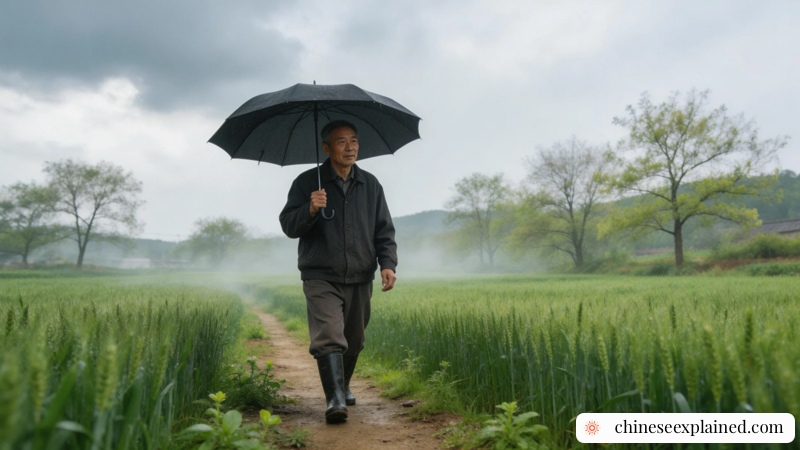
Jingzhe: when spring starts to move
If Lichun is the signal that spring has begun, Jingzhe is when people can actually feel the change.
Jingzhe (惊蛰, jīngzhé) is the third of China’s 24 solar terms. It usually arrives around March 5 or 6, when temperatures rise and spring thunderstorms become more frequent in many regions. The name is often translated as “Awakening of Insects.” In traditional understanding, the first thunder of spring startles insects and small creatures out of winter dormancy.
People interpret that idea differently, but the seasonal shift is easy to notice: winter passivity ends, and daily life speeds up.
Quick facts about Jingzhe
- Chinese: 惊蛰 (jīngzhé)
- Meaning: “Awakening of Insects”
- Position: 3rd of the 24 solar terms
- Date: Around March 5-6 each year
- Seasonal signal: warmer temperatures, spring thunder, increased rainfall
- Traditional focus: field preparation, pest awareness, spring health care
What does “Awakening of Insects” really mean?
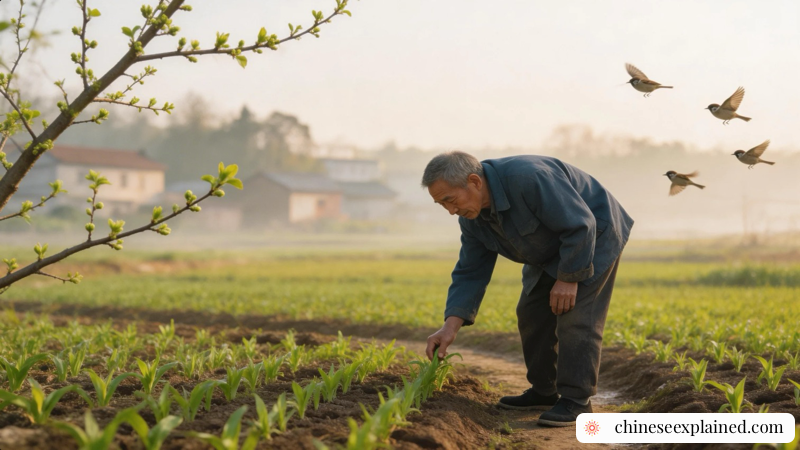
In agrarian China, solar terms worked as timing tools. They helped people decide when to sow, prune, repair irrigation channels, and protect seedlings.
Jingzhe marked the period when:
- Soil temperature began to rise.
- Insects and pests became more active.
- Farmers needed to move from planning to action.
So the name was not only poetic. It also worked as a practical reminder: nature is changing quickly, and farm work needs to keep pace.
In farming communities, people watched small signs to confirm the transition: more birds before dawn, faster bud growth, rising humidity, and thunderstorms after a quiet winter. These signs varied by place, but they formed a shared way of reading the season.
Traditional customs linked to Jingzhe
Customs vary by region, but several themes repeat: pest prevention, spring health adjustment, and respect for seasonal rhythm.
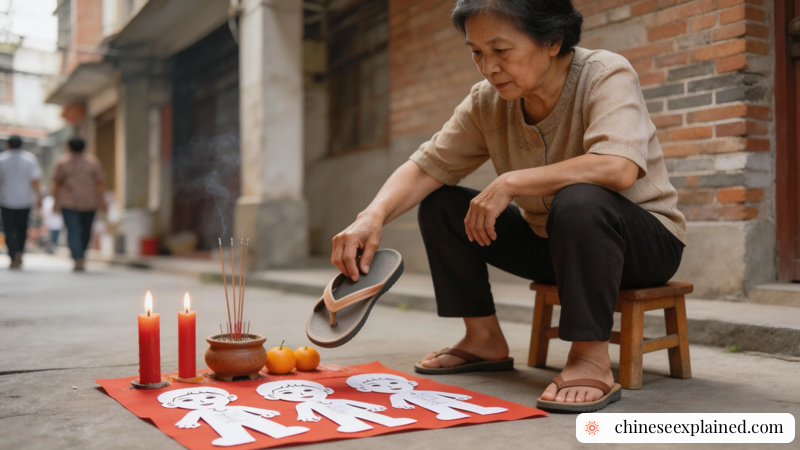
1) Beating the “villain” (打小人)
In parts of southern China, especially in Cantonese culture, Jingzhe is linked to rituals meant to drive away bad luck or harmful influences. One well-known practice is “beating the villain,” where people symbolically strike paper figures that represent troublemakers or misfortune.
It may look dramatic, but its social function is straightforward: people release resentment and start spring with a cleaner mind.
2) Eating pears
A common saying links Jingzhe with pears. Some families eat pears around this solar term because the fruit is seen as moistening and soothing during the dry-to-humid transition. Folk explanations differ by region, and modern nutrition uses different language, but the core pattern is seasonal eating as self-care.
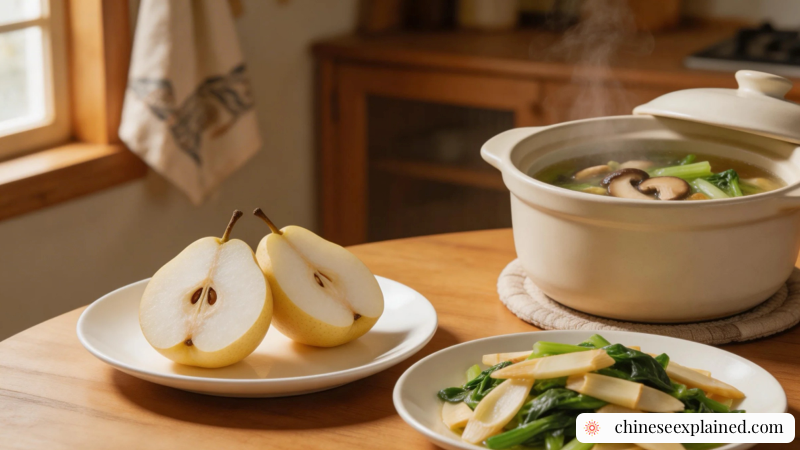
3) Spring nourishment and lighter diets
As the weather shifts, home cooking often becomes lighter: spring vegetables, mild soups, and less greasy meals. In traditional health logic, these choices help the body adapt to warmer and wetter conditions.
Jingzhe and the logic of the 24 solar terms
The 24 solar terms divide the sun’s annual motion into 24 equal segments, each tied to recognizable ecological change. The system came from long-term observation, not abstract theory alone.
Jingzhe is important because it sits at a turning point:
- Winter inertia is ending.
- Biological activity increases.
- Human schedules shift toward outdoor activity.
That practical value is one reason the 24 solar terms still attract global interest. They offer a repeatable way to read environmental change.
In 2016, UNESCO inscribed China’s 24 solar terms on the Representative List of the Intangible Cultural Heritage of Humanity, recognizing them as a knowledge system shaped by generations of interaction between people and nature.
How modern life still reflects Jingzhe
Even in urban settings, many people experience a “Jingzhe moment” without naming it:
- You start opening windows more often.
- Morning light feels stronger.
- Parks become visibly greener week by week.
- Seasonal fatigue gives way to a more active mood.
For families, Jingzhe can be a simple cultural anchor. You do not need a formal ritual. A spring walk, a seasonal meal, or a short conversation with children about weather is enough to connect tradition to daily life.
For international readers learning Chinese culture, this is a useful lens: many traditions are not isolated festivals but parts of a seasonal cycle. Jingzhe makes that cycle easier to see.
Jingzhe in language and cultural imagination
The Chinese character 惊 means “to startle,” while 蛰 refers to creatures hidden in hibernation. Together, 惊蛰 describes an awakening caused by environmental change.
That idea also appears in everyday metaphors: after a long still period, movement often begins with a jolt. A roll of thunder, a shift in rain, or a sudden bloom can all mark that transition.
This helps explain why Jingzhe still resonates beyond agriculture. Many people read it as a seasonal cue for personal renewal: break inertia, restart movement, and align with the new cycle.
A practical way to experience Jingzhe today
If you want to mark Jingzhe, try this simple four-step practice:
- Observe one natural sign: buds, birds, humidity, or first spring rain.
- Adjust one habit: earlier walks, lighter meals, or a steadier sleep rhythm.
- Do one reset action: clean a workspace, restart a paused project, or declutter.
- Learn one seasonal word: 惊蛰 (jīngzhé), and explain it to someone else.
This keeps the core spirit of the solar term intact: observation, adaptation, and action.
Why Jingzhe still matters
Jingzhe is not a major festival with large ceremonies. It is a quieter seasonal checkpoint, and that may be why it has lasted.
It reminds us that seasonal knowledge is practical knowledge. Long before modern weather apps, communities tracked recurring patterns and built routines around them. Those routines supported farming, health, and social timing.
Today, Jingzhe still offers value:
- culturally, as a living part of Chinese tradition;
- ecologically, as a reminder to pay attention to local seasonal change;
- personally, as a cue to move from intention to action.
When spring thunder arrives, Jingzhe is less about superstition and more about attentiveness. The world shifts first, then people respond.
And that sequence, observe-adapt-act, may be one of the most durable lessons in Chinese seasonal culture.