
Start with one rule: use official channels first
If this is your first trip to China, the hardest part is usually not the language or the food. It is figuring out which information is current.
Travel rules have changed quickly in the last two years, especially around entry policy and payment services. So this guide focuses on what you can verify through official sources and how to turn that into a low-stress arrival plan.
As of February 26, 2026, here is what matters most.
1. Entry policy: check your passport case, not generic travel posts
China currently has multiple entry paths running at the same time:
- unilateral and mutual visa-free arrangements for many countries
- 240-hour (10-day) visa-free transit for eligible nationalities and routes
- standard visa routes for everyone else
The National Immigration Administration (NIA) has publicly stated that:
- unilateral visa-exemption arrangements for more than 40 countries were extended through December 31, 2026
- 240-hour transit eligibility covered 55 countries
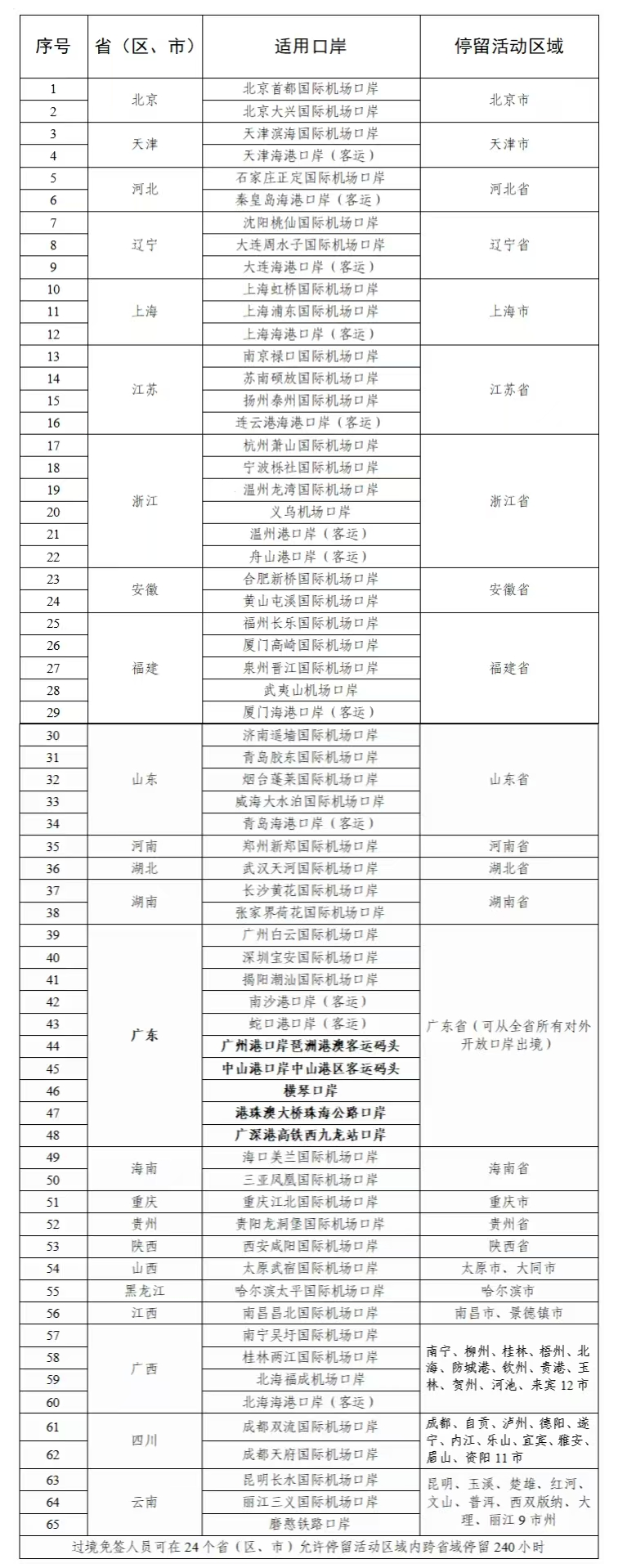
- transit entry covered 65 ports across 24 provincial-level regions
Official lists you can verify:
- Unilateral visa-exemption list (48 countries, with validity notes by country):
- Europe (34): France, Germany, Italy, Netherlands, Spain, Switzerland, Ireland, Hungary, Austria, Belgium, Luxembourg, Poland, Portugal, Greece, Cyprus, Slovenia, Slovakia, Norway, Finland, Denmark, Iceland, Andorra, Monaco, Liechtenstein, Malta, Czech Republic, Sweden, Estonia, Latvia, Croatia, Montenegro, North Macedonia, Albania, Belarus.
- Oceania (2): Australia, New Zealand.
- Asia (7): South Korea, Japan, Brunei, Malaysia, Qatar, United Arab Emirates, Saudi Arabia.
- South America (5): Brazil, Argentina, Chile, Peru, Uruguay.
- Additional temporary entries announced by MFA: United Kingdom and Canada (from February 17, 2026 to December 31, 2026).
- 240-hour visa-free transit eligible nationalities (55):
- Europe (40): Austria, Belgium, Czech Republic, Denmark, Estonia, Finland, France, Germany, Greece, Hungary, Iceland, Italy, Latvia, Lithuania, Luxembourg, Malta, Netherlands, Poland, Portugal, Slovakia, Slovenia, Spain, Sweden, Switzerland, Monaco, Russia, United Kingdom, Ireland, Cyprus, Bulgaria, Romania, Ukraine, Serbia, Croatia, Bosnia and Herzegovina, Montenegro, North Macedonia, Albania, Belarus, Norway.
- Americas (6): United States, Canada, Brazil, Mexico, Argentina, Chile.
- Oceania (2): Australia, New Zealand.
- Asia (7): South Korea, Japan, Singapore, Brunei, United Arab Emirates, Qatar, Indonesia.
- 240-hour visa-free transit ports (65 across 24 provincial-level regions):
- Full official 65-port list and allowed stay areas (official annex image): https://www.gov.cn/zhengce/zhengceku/202511/W020251103423576462017_ORIGIN.png
- Newly added ports (effective November 5, 2025): Guangzhou Pazhou Passenger Port, Hengqin, Hong Kong-Zhuhai-Macao Bridge, Zhongshan Port, and West Kowloon Station of the Guangzhou-Shenzhen-Hong Kong High-Speed Rail.
Practical pre-booking checklist:
- Confirm your route type first:
- unilateral/mutual visa-free entry
- 240-hour visa-free transit
- regular visa
- Match your case using three variables together: passport nationality + route + purpose of visit.
- Do not buy non-refundable flights before policy matching is complete.
- Keep a screenshot/PDF of the exact official notice you are relying on.
If you are using 240-hour visa-free transit, all of the following must be true:
- your nationality is in the official 55-country list
- you hold a valid international travel document (NIA text requires at least 3 months remaining validity)
- you hold a confirmed onward ticket to a third country/region within 240 hours
- your entry port is within the 65 eligible ports and your stay is inside the allowed area
- your activities remain within permitted scope (tourism, business, visits, family visits; work/study/journalism still require prior visa approval)
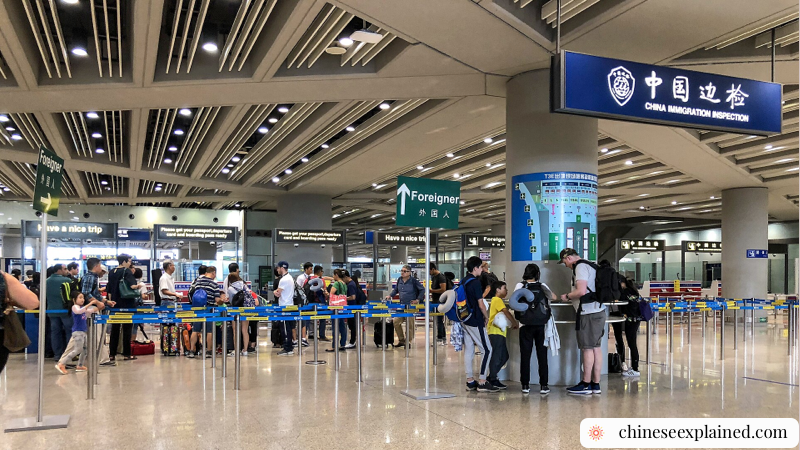
Airport check-in reality:
- airlines and border officers review documents differently from social media advice
- prepare one folder (digital + printable) with passport page, onward ticket, first-night accommodation, and itinerary summary
2. Accommodation registration: hotels do it; private stays still require action
This is one rule many first-time travelers miss.
Under Article 39 of China’s Exit and Entry Administration Law:
- if you stay in a hotel, the hotel should submit your accommodation registration information to local public security authorities
- if you stay in a non-hotel address (friend’s home, rented apartment, etc.), you or your host must register with local public security authorities within 24 hours after check-in
Visa-free entry does not remove this requirement.
Practical SOP for non-hotel stays:
- Confirm your case on day zero: hotel (front desk submits) vs private stay (you/host must file).
- Prepare the core documents before arrival:
- passport (including latest entry stamp/visa page)
- local address proof (for example, lease contract or property proof)
- host ID/contact information if staying with friends or family
- Submit registration quickly:
- in most cities, the default route is the local police station for your address
- some cities support online or self-service channels; if unclear, call 12367 or your district police office first
- Keep proof after submission (paper receipt or screenshot) for later checks.
- If you miss the 24-hour window, register immediately instead of waiting longer.
Penalty note:
- failure to register for non-hotel stays can be handled under Article 76, and penalties may apply depending on delay and circumstances.
3. Payments in China: set up at least two methods before you land
Official payment guidance for foreign visitors highlights five basic channels:
- bank card
- mobile payment
- cash
- bank account
- e-CNY
For short-term visitors, a realistic setup is:
- a mobile wallet setup path (for small daily spending)
- an international bank card backup
- a small amount of RMB cash for edge cases
Weixin Pay and Alipay setup requirements for foreign visitors
Based on official guidance, the practical setup requirements are:
- Register the app account first (foreign or Chinese mobile number can be used).
- Bind an eligible bank card.
- Complete identity verification when prompted (recommended before your trip starts).
What you can generally bind:
- card brands listed in official guidance include Visa, Mastercard, UnionPay, American Express, JCB, Diners Club, and Discover
- issuer-side verification is required when binding an overseas card
- exact card availability, limits, and fees can vary by product page and issuing bank
Real-name / verification and limits:
- according to PBOC-cited official guidance, no ID info is required for mobile-payment transactions below a certain amount
- for higher limits, identity verification is required
- Tencent states that for verified overseas Weixin Pay users, limits were raised up to USD 5,000 per transaction and USD 50,000 annual cumulative limit
Weixin Pay specific notes from Tencent:
- Weixin Pay supports linking major international card organizations (including Visa, American Express, Discover/Diners Club, JCB, Mastercard)
- Tencent also states users can complete passport-based verification in-app for higher limits
Alipay-related official notes:
- official guidance confirms foreign users can link international cards in Alipay
- Alipay also supports some overseas e-wallet interoperability scenarios (availability depends on wallet, merchant, and city)
Operational details that reduce payment failures:
- Link cards to both Weixin Pay and Alipay before departure if possible.
- Keep one physical international card available for fallback.
- Keep RMB cash for edge cases and transport/merchant exceptions.
- Use ATMs with your card-organization logos for withdrawals if needed.
- Start with a small-value test payment right after landing.
Fee/limit notes to check before use:
- Tencent states transaction fees are waived for Weixin Pay international-card transactions at or below RMB 200 (subject to the payment page)
- platform limits and issuer-side controls both apply; if a payment fails, check both app prompts and card-issuer alerts
Do this before departure:
- update your payment app to the latest version
- complete identity verification steps if prompted
- test one low-value payment flow after arrival
Do not rely on only one payment method. Redundancy is what makes travel smooth.
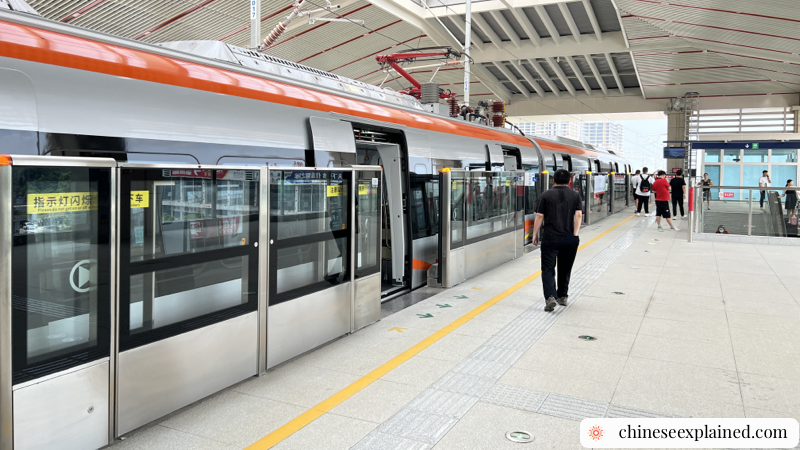
4. Trains and high-speed rail: learn 12306 once, save hours later
China’s rail system is efficient, but first-time users get blocked by account and ID steps.
According to the official 12306 English FAQ:
- foreign passengers can purchase real-name tickets with valid passports
- 12306 English services support ticket purchase/refund/change functions
- the official booking channel is 12306 (or authorized railway channels)
- passengers must keep the ID document used for ticket purchase for boarding/checks
High-impact rules many first-timers miss:
- on the 12306 English website, only foreign passports are accepted as ID type
- one valid ID can buy only one ticket for the same train on the same travel date
- website services are 24h for query/refund; ticket sales and endorsement are available 05:00 to 01:00 next day (Tuesday: 05:00 to 23:30)
- refund fee tiers are explicit: 0% (more than 8 days), 5% (more than 48h), 10% (24-48h), 20% (less than 24h)
- endorsement/change is normally one time per ticket under availability constraints
Station-side execution checklist:
- Create your 12306 account early and add passenger info exactly as in passport.
- Keep the same passport used for booking with you on travel day.
- Leave extra time for security check + ID verification + platform transfer.
- If your passport is lost before boarding, apply for a temporary railway ID certificate/proof at the station and follow station instructions.
Two common mistakes:
- booking through unofficial websites and struggling with after-sales changes
- reaching the station without the same ID document used for ticketing
If your trip includes intercity travel, set up 12306 before arriving in China. That single step removes a lot of stress.
5. A practical 72-hour arrival checklist
Before takeoff
- Confirm your entry type against official notices (not reposts).
- Save digital + printed copies of passport page, onward ticket, and first-night address.
- Prepare at least two payment rails (wallet + card, plus some RMB cash).
- Complete app setup: Weixin Pay/Alipay registration, card linking, and verification prompts.
- Create 12306 account and verify passenger details before you travel.
First day in China
- Complete accommodation registration (hotel flow or private-stay filing within 24 hours).
- Run one test payment by mobile wallet and confirm card fallback works.
- Confirm your next-leg train/flight details and passport consistency.
- Keep receipts/screenshots for registration and payment setup.
First intercity move
- Use 12306 or authorized channels.
- Bring the same valid ID used in booking.
- Arrive at station with extra buffer time if it is your first ride.
- If plans change, process endorsement/refund early to reduce fees.
6. Four mistakes first-time visitors can avoid immediately
Mistake 1: Treating all visa-free policies as one thing
Different routes have different legal conditions. “Visa-free entry” and “visa-free transit” are not interchangeable. Always match policy to passport + route + purpose.
Mistake 2: Ignoring accommodation registration on private stays
Hotels usually handle it. Non-hotel stays still require action. The 24-hour clock starts from check-in.
Mistake 3: Trusting one payment rail only
Keep at least one backup. If one method fails, your day should still continue normally. Carry enough fallback options to cover transport, meals, and emergency purchases.
Mistake 4: Using non-official transport channels by default
For rail, start with official 12306 channels first. You can experiment with alternatives later. This matters most when you need changes, refunds, or ID-related support.
Final note
China is easier to navigate than many first-time visitors expect. But it rewards preparation.
If you do only three things before your first trip, make them these:
- verify entry policy from official sources
- plan accommodation registration clearly
- set up redundant payments
Once those are done, the rest of the trip gets much lighter.
Fact-check sources (checked on February 26, 2026)
- China Railway 12306 official English FAQ: https://www.12306.cn/en/faq.html
- NIA official unilateral visa-free country list (updated): https://www.nia.gov.cn/n897453/c1731154/content.html
- MFA spokesperson Q&A (UK and Canada added to unilateral visa-free policy, effective February 17, 2026): https://www.mfa.gov.cn/wjbxw_new/202602/t20260215_11610411.shtml
- State Council (English): Guide to Payment Services in China: https://english.www.gov.cn/news/202408/22/content_WS66c71b3ec6d0868f4e8ea2b1.html
- State Council (English) payment service guide for overseas visitors (PBOC policy highlights): https://english.www.gov.cn/news/202404/11/content_WS6617c858c6d0868f4e8e5f4d.html
- State Council “Guide to Working and Living in China” (source: Ministry of Commerce; mobile payment setup details): https://english.www.gov.cn/2025special/bizexpatsinchina2025
- State Council (English) citing NIA latest visa-free and transit expansion data (65 ports): https://english.www.gov.cn/news/202511/04/content_WS69094ae0c6d00ca5f9a07472.html
- State Council policy library repost of NIA Announcement No. 4 (contains official 55-country list and annex for 65 ports): https://www.gov.cn/zhengce/zhengceku/202511/content_7046910.htm
- State Council (English) FAQ reminder on accommodation registration: https://english.www.gov.cn/services/202306/22/content_WS5f1507b2c6d00bd0989c6404.html
- NIA policy interpretation and penalty benchmark (Article 39 / Article 76 accommodation-registration basis): https://www.nia.gov.cn/n741440/n741587/n1316094/n1459245/c1593719/content.html
- Tencent official update on Weixin Pay international cards for overseas users: https://www.tencent.com/en-us/articles/2201652.html
- Tencent official update on streamlined setup and higher limits for overseas users: https://www.tencent.com/en-us/articles/2201831.html